Showing posts with label Cookbooks. Show all posts

Tuesday, October 22, 2013

Eggplant Croquettes

I have a new secret cooking boyfriend, Yotam Ottolenghi.  I own his cookbook, Jerusalem, and recently decided to check out his book, Plenty, from our public library.  I looked through the entire cookbook twice before I noticed it was missing meat.  Two times until I finally realized this cookbook was vegetarian.  

That's my definition of a fabulous vegetarian cookbook--you don't miss the meat.  There aren't a lot of fake meat products (that have been processed like crazy).  In fact, there are zero fake meat products and limited tofu and soybean recipes.  Fabulous!  In my opinion, it is up there with the Moosewood cookbooks (which are my absolute favorite vegetarian cookbooks).  This cookbook is going on my Christmas wish list--maybe the dog will get this one for me.  Until then, I need to share a few recipes here so I have them in case the dog forgets what to get me.

Now that I have mastered frying, after many, many failed attempts, this recipe was relatively simple.  It is a time consuming recipe, but most of the time was letting eggplant drain (30 minutes) and chill (20-30  minutes).  Hands on time wasn't bad at all.  Everyone in my a family ate these, until.....until...M dissected the croquettes because I wouldn't tell her what was inside it and she discovered there was, horror of horrors, eggplant.  

The dipping sauce that accompanies the croquettes is a basic mayonnaise.  It is completely optional, however I would recommend serving a dipping sauce with this--a flavored mayonnaise, marinara, tartar sauce, or whatever your favorite sauce for breaded, fried foods are (the kids used ketchup).

This serves 6.

Eggplant Croquettes
adapted slightly from Plenty by Yotam Ottolenghi

4 medium eggplants
2 medium russet potatoes, cooked, peeled, and smashed 
1 large egg, beaten
5 oz feta, crumbled
3 T grated Parmesan
1/2 t salt
black pepper
1 3/4 (or possibly more) c dried white breadcrumbs (or panko)

canola, safflower, or sunflower oil for frying

Optional Mayonnaise
1 egg yolk
1 small garlic clove, crushed (optional)
1 1/2 T lemon juice
1/4 t salt
1/4 c grapeseed or olive oil (the oil gives the mayo a lot of it's flavor)
1/4 c olive oil
2 T chopped tarragon (optional, again this gives a lot of the flavor though)

Roast the eggplants (I prefer on a hot grill, as if I was making baba ganoush.  Char all the sides until the eggplant is very soft).  Cool the eggplants slightly, until you can touch them, make a slit along each eggplant and use a spoon to scoop out the flesh.  Leave the black skin behind.  If there are lot of seeds, you can also discard some of them (but try to avoid taking out a lot of flesh).  Place the flesh in the colander and discard the skin (and seeds if you removed some).  Let drain for 30 minutes or more to get rid of some of the liquid.

Place the eggplant flesh in a large bowl.  Add the smashed potatoes (not mashed with milk, just smashed up), egg, feta, Parmesan, salt and a dash of pepper.  Stir together with a fork.  Add half the bread crumbs and stir.  The mixture should be solid enough to hold its shape, but it will still be very sticky.  If you need to, add more breadcrumbs until the mixture will hold together.

Remove the mixture from the bowl and divide it into four.  Roll each portion into a thick sausage about 1 inch in diameter.  Sprinkle the remaining breadcrumbs on the work surface and very gently roll the eggplant/potato mixture in them until  they are completely coated.  Carefully transfer to a baking sheet and refrigerate for at least 20 minutes.  If the long snakes (sausages, I'm a mom) break apart when you are transferring them, that's ok.  Stick them back together the best you can.

While the croquettes refrigerate, make the mayonnaise.  In a small bowl (or a small food processor if you have one), place the egg yolk, garlic, lemon juice, and salt.  Using a handheld mixture fitted with a whisk (or you can whisk by hand), whisk the mixture on high speed.  While you whisk, slowly add the oils, one after another, in a slow, steady stream.  When the mixture resembles mayo (thick and creamy), fold in the tarragon.  Store in fridge.

Cut each cooled snake into 2 1/4" barrel-shaped pieces.  Pour enough frying oil--I use canola or safflower--into a heavy skillet (I use my black cast iron skillet) to come up about 3/4 inches on the sides.  Heat up the oil over medium high heat (to around 350 degrees.  I find the secret to successful frying is a frying/candy thermometer, which is very different than a meat thermometer because it goes much hotter).  Fry the croquettes in small batches for about 3 minutes, turning them to color them evenly.  Transfer to the paper towels to drain. 

Serve hot with a dipping sauce.

Tuesday, August 27, 2013

Vegetable Pot-au-Feu

One of my favorite cookbooks is Dorie Greenspan's Baking:  From My Home to Yours.  The recipes are rich, comfort food, gift worthy desserts.  I've worked my way through it, particularly the scones/muffins section and the cookies section.  I've attempted a few of her cakes with good results.  It's a book that has a permanently reserved space on my top-tier cookbook shelf.

A few years ago, Dorie (we're on a first name basis, you know?) came out with a new cookbook, Around my French Table.  I hemmed and hawed over whether or not I should buy it and I eventually decided against.  It just sounded too fancy.  I perused it at the bookstore and most of the recipes were heavy on meat, making it just a company cookbook (not an everyday cookbook, since we eat meatless at least half the week or more most weeks).  I finally realized I could check this book out of the library.

My expectations were more or less correct.  I found a handful of recipes I wanted to try, but not enough to warrant buying the book, at least not now.

This recipe is the exception.  In this vegetable pot-au-feu, vegetables have a starring role and it is a main dish (most of the vegetarian recipes in this cookbook are relegated to side dishes).  We loved it, M and Curtis especially.  I made poached eggs to serve in it, and learned for next time, the kids would rather go eggless.  That makes it even easier!

I made this in a wok, like Dorie suggested, but a dutch oven or soup pot would work just as well (and I'll probably use that next time).  Dorie also said this wasn't good leftovers--don't tell that to M!

This serves 4 - 6.

Vegetable Pot-au-Feu
adapted from Dorie Greenspan's Around my French Table.

2 T olive oil
2 garlic cloves, minced
1 small to medium onion, thinly sliced
1 leek, halved lengthwise and well rinsed, sliced
3 medium potatoes (6 small), sliced 1/4" thick
2 - 4 small to medium carrots, cut on the diagonal into 1/4" slices
3 c water (can also use vegetable or chicken stock)
1 2-inch piece lemongrass, split lengthwise
8 - 12 asparagus stalks, trimmed and cut into 1 1/2" pieces
4 - 6 shiitake mushrooms, stemmed and sliced
1/2 lb spinach, chard, or kale, stemmed, washed, and coarsely sliced
4 large eggs, hardboiled or poached
slices of crusty bread, toasted

Heat the olive oil over medium hat.  Add the onion and leek, season with salt and pepper, and sauté until they just begin to soften, about five minutes.  Toss in the garlic and cook for an additional minute. Stir in the potatoes and carrots, followed by the water and lemongrass.  Bring to boil, then reduce heat and simmer uncovered, until the vegetables are almost tender, about 10 minutes.  (While the vegetables are simmering, you can cook the eggs).  Add the asparagus and shiitake mushrooms to the vegetables and cook for an additional 4 minutes, or until tender.  Stir in the spinach (or other greens) and cook until  spinach (or greens) are slightly wilted.  Spinach will take about 2 minutes, chard slightly longer, and kale even longer.  Taste and season with salt and pepper.

To serve, place a slice of toasted crusty bread in a bowl.  Ladle soup over top and slice in the egg.  Serve immediately (I found it easiest to serve at the counter, not on the table).


Monday, January 24, 2011

Pistachio and Apricot Granola

I got a new cookbook for Christmas. (Really, folks, I think I may have a problem here. It may be time for an intervention. I LOVE COOKBOOKS). This really isn't a surprise, the cookbook as a present for me. The surprise was that our dog bought it for me. She was so fortunate that I could do her Christmas shopping for her.

I had been eyeing this cookbook for awhile--reading reviews of it, skimming it in my trips to the bookstore. It was so kind for our dog to help me out here. Let me tell you, I have not been disappointed in it at all. Some of the recipes are "fancier" than what I usually make---but I also have also found some homey, CSA friendly recipes as well. Plus, before each recipe, there is a short story to go with it---always autobiographical and connected in some way to the recipe and at least one page long. I love it. Two of my loves present at one place, reading and cooking. In the Kitchen with a Good Appetite, by Melissa Clark has not disappointed me. I've made four recipes from it so far, all of which I would make again without a moment's hesitation. It definitely has a spot reserved for it on my main cookbook shelf (and not relegated to the occasional-use cookbook shelf).

My second recipe to make from this book was granola. I love granola, but haven't been feeling the love from any of my granola recipes lately. This recipe was exactly what I needed. I am back on my weekly granola making kicks and am looking forward to playing around with substituting the nuts/fruits/spics (I think next up is a tart dried cherry and pecan granola....).

A warning--don't try to substitute roasted, salted pistachios for the raw, unsalted ones. It makes a huge difference and the flavor is much better with raw, unsalted pistachios. Hulling 1 c pistachios takes a bit of time--about 15 minutes--so if you can afford it, I would suggest paying extra for hulled pistachios. Otherwise, plan on spending some time hulling. The green of the pistachios and pumpkin seeds plus the orange of the apricots makes for a very visually pleasing granola

This recipe makes about 9 cups. I love it with some milk on it for breakfast, or all by itself as a snack. I've also read that's good with yogurt or fresh, milky ricotta and berries.


Dried Apricot and Pistachio Granola
adapted from In the Kitchen with a Good Appetite by Melissa Clark

3 c rolled oats (not quick)
1 c raw pistachios, hulled
1 c raw pumpkin seeds, hulled
1 c unsweetened shredded coconut (or coconut chips which aren't as fine)
1/2 - 3/4 c pure maple syrup
1/2 c extra virgin olive oil
1/4 c brown sugar
1/2 t salt
1/2 t cinnamon
1/2 t ground cardamom
3/4 - 1 c dried apricots, chopped (optional)

In a large bowl combine everything but the apricots. Spread mixture onto a large rimmed baking sheet (a half sheet pan aka cookie sheet with sides) in an even layer. Bake in preheated 300 degrees oven for 45 minutes, stirring every 10 minutes to allow for even browning. Granola is done when it is golden brown and well toasted. Stir chopped apricots into toasted granola. Eat however you desire.

Posted by Picasa

Friday, November 12, 2010

Chard with Olives and Pine Nuts


I got a new cookbook the other week. It's been quite a while since I've done that and when I saw table of cookbooks at Costco, I couldn't resist. I passed by Dorie Greenspan's Around My French Table (new French cookbook) and another one (I can't remember) that was also on my possible cookbook list for Mark Bittman's Food Matters Cookbook.

I have a love/hate relationship with Mark Bittman. I love everything he's passionate about--good foods that are good for you. He's big into vegetables (he's the "vegan-before-6" guy). He uses meat as seasonings often. I like that. I like his writing for the New York Time's and his food blog. However, I am convinced by his cookbooks, and in retrospect, I am a little surprised I bought this one. I have his How to Cook Everything and have had mixed results with his recipes. I often feel crucial information is missing from his recipes (like the size of pan to use, when size does matter).

This is the second recipe from his Food Matters Cookbook that I made. The first recipe was a bit of a major fail. I contemplated returning the cookbook after that (I don't often have major fails that are due to a faulty recipe. Usually I take full responsibility because generally, I have lost the ability to read and comprehend. In this case, it was the recipe at fault and not me). However, I decided to give another recipe a try because I like Bittman and his food philosophy.

Success!! Both Curtis and I enjoyed this dish. I am pleased to have found a way to cook chard in a side dish that is easy and quick. The kids didn't like it, but I didn't expect them too, so nothing was lost.

This serves 2 - 4 as a side dish.

Chard with Olives and Pine Nuts
adapted slightly from the Food Matters Cookbook

3/4 lb chard
2 T pine nuts
1 T olive oil
6 garlic cloves, sliced
3 T black olives (preferably, oil cured and wrinkly--like bulk olives at Whole Foods or Central Market, etc)
1/4 c water
salt and black pepper, to taste
feta cheese, crumbled, to taste

Cut leaves from stems of chard. Cut the leaves into wide ribbons and slice the stems about 1/4 - 1/2" thick. Keep the leaves and stems separate.

Put the oil in a large skillet over medium-low heat. Heat for 1 minute. Add the garlic and cook, stirring until soft, golden, and fragrant, 5 - 10 minutes. Turn the heat up to medium and add the chard stems and black olives. Cook until the stems begin to soften, just a minute or 2. Add the chard leaves, water, and a little salt and pepper. Raise the heat to medium-high and cook, stirring until chard leaves are wilted and most of the liquid has evaporated, about 5 minutes. While the chard cooks, toast the pine nuts in small pan over medium-low heat, until they are fragrant and golden. Stir the pine nuts into the cooked chard. Adjust seasonings as necessary. Sprinkle with a little feta and serve, hot or at room temperature

Thursday, July 2, 2009

My new favorite website

I discovered this website, Super Cook, through a newsletter I get from a mom-based blog. I think I am in love. Using it is simple: enter an ingredient that you want to use. I suspect in my case it will usually be a vegetable. I tried entering chard today because I was unsure of what I was going to do with my chard from the box. Up pops 20 recipe links. Before taking the time to view the recipe I could look at other ingredients in the recipe so I don't waste timing looking at recipes that have things I don't have.

A couple of chard recipes I found? Well, I am excited about Fusilli with Feta from the Whole Foods website and Chard with Bacon Dressing from recipezaar. Sweet. This website makes a CSA box full of eggplant, squash, potatoes, and chard so much easier!! Great, I gave away my secret and have rendered this blog obsolete! :)

Thursday, February 19, 2009

Sesame Mayonnaise

There are several things that continue to intimidate me in my cooking: 1) Frying things. 2) Sauces. 3) Thickening things with cornstarch (with the exception of pudding). This morning I decided to attempt a sauce--homemade mayonnaise.

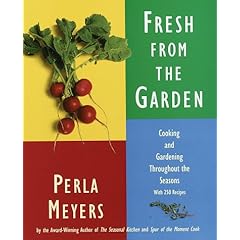
At our last trip to the library I found a cookbook that really made me excited: Fresh from the Garden. This cookbook was published before the whole locavore movement took off--in the 1990's. The cookbook is organized by season that vegetables grow and give advice for how to pick vegetables and how to grow them. It's fun reading. Most of the recipes how easy to find ingredients and for the most part aren't too intimidating in their technique. It is also not a vegetarian cookbook, which I appreciate as well. The author was raised in Europe where some of our "strange" vegetables, like kohlrabi are commonplace so there is a larger variety for some "not as sexy" vegetables like kohlrabi, cauliflower and brussel sprouts.

I digress. I found in this cookbook a recipe for homemade mayo to top lightly steamed broccoli. It seemed like the perfect vegetable side for our picnic lunch for our playgroup today. If you are squeamish about raw eggs, this isn't a recipe for you. It does contain two raw eggs. I probably somewhat incorrectly tell myself that since the eggs are from free range, organic chickens, my risks of salmonella is lower than store bought eggs. Probably scientifically incorrect, but it works for me. I loved the final product--the garlic and sesame oil are wonderful flavors. I steamed the broccoli for 2 minutes before eating it, but that's just a personal preference. I think steaming takes away a little of the strong flavor of raw broccoli. I somehow managed to emulsify (break up the molecules of oil) into the eggs so it didn't separate. I think the key is adding the oil really, really slowly, even taking breaks to check on kids as you do it. I used a food processor to make this, although the recipe suggested a blender. Either will do. All in all, I must admit I am proud of myself for successfully conquering a sauce.

Sesame Mayonnaise
1/2 c olive oil
1 T sesame oil
1 extra-large egg
1 extra-large egg yolk
1 T rice vinegar (or cider vinegar)
ground black pepper
dash of salt
pinch of cayenne pepper
1 small garlic clove, minced
3 T scallions, finely minced (optional--I didn't have so I didn't use)
1 T sesame seeds, lightly toasted.

Combine the olive oil and sesame oil in a liquid measuring cup. Set aside. In a food processor or blender, combine the egg, egg yolk, vinegar, salt, pepper, and cayenne and blend at high speed for at least 30 seconds. With processor still running, add the oil mixture by droplets until the mixture begins to emulsify and thicken. Add the remaining oil in a slow steady drizzle until all has been incorporated. Take your time while doing this--take breaks, letting the processor run to check on the children, let the dog in, etc while adding the oil. The consistency of the mayonnaise should be sauce-like rather than a very thick store bought like mayonnaise. Remove from processor and stir in garlic, scallions, and sesame seeds. Adjust seasoning as needing, adding drops of lemon juice to taste if desired (I didn't do this, it tasted great as it was!). Serve drizzled over fresh veggies or use a dip for fresh veggies. (I prefer lightly steamed broccoli and raw carrots for this).

Thursday, November 13, 2008

Cookbooks?

I am working on my Christmas list (yes, my family still does Christmas lists.....it makes things so much easier!) and thought maybe I could use a new cookbook. I've been browsing on amazon.com for cookbooks and thought Deborah Madison's cookbooks looked good. Does anyone have any of her cookbooks and have thoughts on them? Do you have a favorite cookbook that features vegetables/produce in recipes (meat is fine, but I need more bok choy and eggplant recipes for starters!)? My favorite cookbooks I have are Simply in Season and the Moosewood Restaurant cookbooks. I am also looking for ethnic cookbooks-especially Asian or Mediterranean (because let's face it, most other cultures do better at cooking seasonly than our typical "American" cuisine and these cultures have some of the produce we are inundated with from our CSA). Any suggestions would be appreciated!

Friday, September 26, 2008

Correction

I was told that people were having a problem with the link to my cookbook. The easiest way to find it (minus the malfunctioning link) may be to go to blurb.com and search the bookstore for Eating the Bounty (that's the name of the Cookbook). Hope that helps!

Friday, September 19, 2008

A Cookbook

One of the things that helped me most adapt to seasonal, local eating was a couple of good cookbooks. The Moosewood cookbooks are incredible. I especially like their New Classics, I've probably made one third to half of their recipes in the 4 or 5 years I've had their cookbook. Their Sundays at Moosewood cookbook is fun as well. That cookbook features different areas of the words and recipes from those areas. All Moosewood cookbooks are vegetarian, although fish and seafood recipes are included. The New Classics gave me lots of ideas for vegetables like summer squash, butternut squash, and cabbage to name a few. I enjoy Sundays at Moosewood for variety.

I have also found Mennonite Country Style Recipes and Kitchen Secrets by Esther Shank to be very helpful. If you want to start canning or freezing, this is an excellent place to start. It was first published in the 1970's or 80's (I think) and many recipes actually call for MSG, which I simply ignore. Curtis and I actually have sat down and laughed as we read this book because it not only gives cooking basics, but tells you how to kill a chicken and dress a rabbit. I can't say I've used that yet, but it's nice to know if I ever want to kill a chicken for stew, I'll know where to look.

By far, the most helpful cookbook has been Simply in Season (which is available at Ten Thousand Villages). This cookbook has both vegetarian and meat filled recipes. What makes it unique is that it doesn't often call for fancy ingredients you need to make a special trip to the store for and the chapters are divided by season. Granted, here we don't follow the same seasons as most of the US does, but it at least doesn't have things like asparagus and tomatoes in the same recipes (which are in season during very different seasons).

After collecting recipes from these cookbooks, cooking magazines, epicurious.com, and other cookbooks, remembering which recipe was where sometimes proved to be a problem. Thus, my own cookbook was born. I typed all my recipes into software I downloaded from blurb.com and created a location for all my tried and true recipes. I still am constantly finding new recipes (like the zucchini frittata, which incidentally, was from Moosewood's New Classics cookbook), which means eventually, there probably will be a volume 2. However, it's been really helpful to have everything in one place, sorted how I want them, and with an index I know how to use.